How to Choose Hardware Finishes for Your Bathroom That Match
- 15 June 2026
- Carter Bay
Finishes help determine whether a bathroom feels coordinated, updated, and complete. The finish you choose for towel bars, toilet paper holders, robe hooks, shower rods, and grab bars affects the room’s style, maintenance needs, and how well the hardware coordinates with faucets, lighting, cabinet pulls, and tile.
The safest approach is to choose a single dominant finish for your main bath accessories, then repeat it throughout the room. You can mix finishes, but the mix should look intentional. At Carter Bay, you can find bathroom hardware in a range of finishes, including towel bars, robe hooks, toilet paper holders, shower rods, grab bars, and other bath accessories. This guide explains the most common bath accessory finishes, how each one performs in daily use, and how to choose a finish that works with the rest of your bathroom.
A Quick Guide to Finishes for Your Bathroom
Choose the finish that matches your existing fixtures, fits your bathroom style, and works with the amount of cleaning you want to do. Satin nickel is often the easiest finish to coordinate, polished chrome gives bathrooms a bright classic look, matte black adds contrast, and warmer finishes like satin brass, oil-rubbed bronze, and dark bronze work well with wood tones, cream tile, and traditional details.
| Finish | Why Choose It | Best Fit |
|---|---|---|
| Satin nickel | A safe, versatile finish that is easy to coordinate | Transitional, contemporary, and everyday bathrooms |
| Polished chrome | A bright, reflective finish that feels clean and classic | Modern, minimalist, and guest bathrooms |
| Matte black | A bold finish that adds contrast without much shine | Contemporary, farmhouse, and industrial bathrooms |
| Oil-rubbed bronze | A dark, warm finish with a more traditional look | Rustic, traditional, and warm-toned bathrooms |
| Satin brass | A warm decorative finish with a softer look than shiny gold | Warm modern, transitional, and elevated bathrooms |
| Dark bronze | A deep finish that adds contrast without going fully black | Transitional and contemporary bathrooms with warm undertones |
| Stainless steel | A practical, corrosion-resistant finish for high-use spaces | Commercial, utility, and modern bathrooms |
| Aluminum | A lightweight, corrosion-resistant option for select functional pieces | Utility-focused and contemporary applications |
How Finishes Affect Style and Maintenance
A finish is the visible surface color, sheen, and texture applied to a piece of hardware. The finish is what gives a towel bar, toilet paper holder, robe hook, shower rod, or grab bar its final appearance.
The finish also affects how the hardware looks after daily use. A polished finish reflects more light but tends to show fingerprints and water spots more easily. A brushed, satin, or matte finish usually hides small marks better because the surface is less reflective.
Two towel bars, robe hooks, or paper holders can have the same base material and still look completely different because of the finish. For example, one towel bar may have a polished chrome finish for a bright mirror-like look, while another towel bar may have a matte black finish for a flatter, more contemporary appearance.
Finish vs Material: What’s the Difference?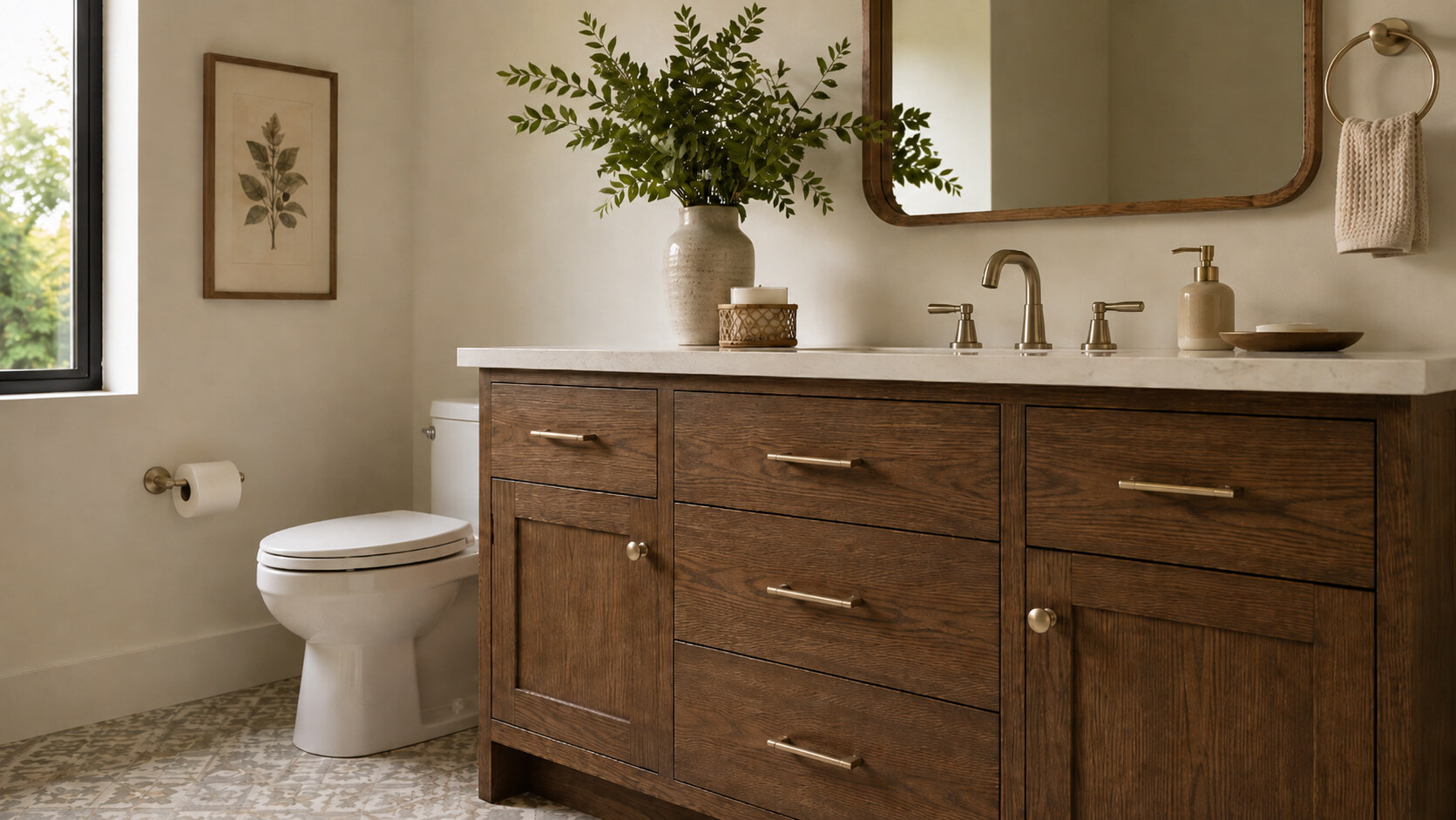
The visible finish is not the same thing as the material underneath it. The finish describes the visible surface, while the material describes the base construction of the product.
The finish affects appearance, sheen, color, texture, and day-to-day maintenance. The material affects strength, weight, corrosion resistance, and long-term durability. A good buying decision considers both.
For example, stainless steel refers to a material, but stainless steel hardware can also have a brushed, satin, or polished surface. Chrome, matte black, satin nickel, and oil-rubbed bronze usually describe finishes applied to the surface of the hardware. Before purchasing, review the product details for both the finish and the base material so you understand what the product looks like and how it is constructed.
A Simple Way to Narrow Down Your Finish Options
If you are choosing between several finish options, start with the room’s existing fixtures. The faucet, shower trim, light fixture, cabinet hardware, and mirror frame usually give the clearest direction.
For the lowest-risk choice, match your main accessories to the faucet or shower trim. For a more designed look, choose one dominant finish for the main hardware and one accent finish for lighting, mirrors, or cabinet pulls.
A few simple rules can help:
- Choose satin nickel when you want the easiest finish to coordinate.
- Choose polished chrome for a bright, clean, classic bathroom.
- Choose matte black when you want contrast and a more modern feel.
- Choose oil-rubbed bronze or dark bronze when the bathroom features warm tile, wood, or traditional details.
- Choose satin brass when you want a warmer finish that feels decorative but not overly shiny.
- Choose stainless steel or aluminum when function, durability, or commercial use is the priority.
Satin Nickel
Satin nickel is one of the easiest finishes to coordinate. It has a soft silver tone, a subtle warm undertone, and a brushed appearance that feels less reflective than polished chrome.
Satin nickel works well when you want a finish that blends into the room rather than becoming the main design feature. It pairs naturally with white, gray, greige, and soft neutral palettes. Satin nickel also coordinates well with many stainless steel and brushed nickel fixtures, which makes it a practical choice for remodels where some fixtures are staying in place.
Satin nickel is a strong choice for primary bathrooms, guest bathrooms, and rental properties because it is flexible and does not demand a very specific design style. It also tends to hide fingerprints and light water spotting better than highly polished finishes.
Best for: transitional bathrooms, contemporary bathrooms, neutral tile, white vanities, gray vanities, and spaces where you want an easy-to-match finish.
Polished Chrome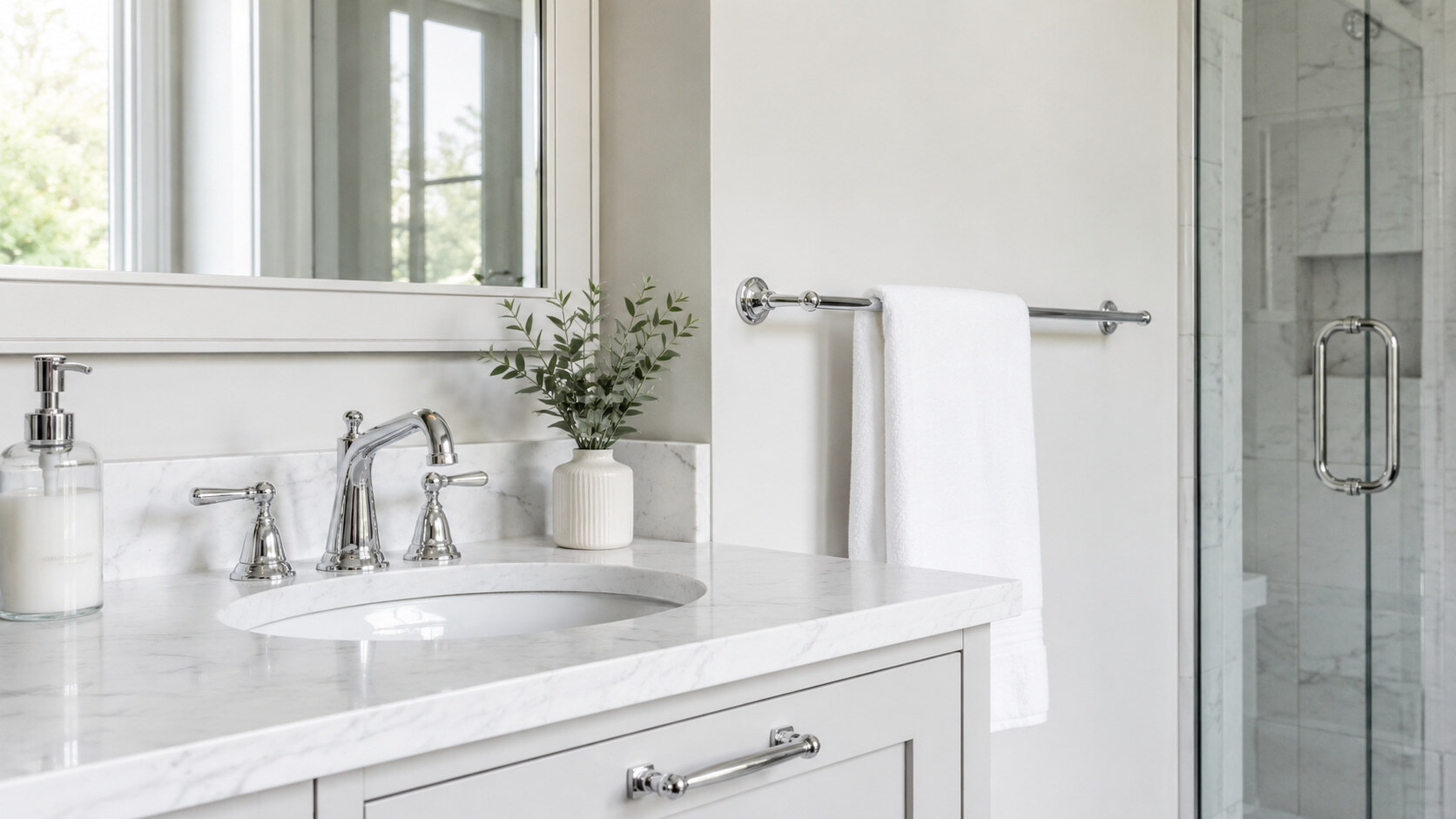
Polished chrome is a classic finish with a bright, mirror-like surface. It reflects light well, which can help a small bathroom feel cleaner and more open.
Polished chrome is common on faucets, showerheads, and bathroom accessories, so it is often easy to match with existing plumbing fixtures. It works especially well with white subway tile, glass shower doors, cool-toned stone, and minimalist bathroom designs.
The main tradeoff is maintenance. Because polished chrome is highly reflective, it can show fingerprints, toothpaste marks, soap residue, and water spots more clearly than brushed or matte finishes. Polished chrome is still a practical choice, but it may need more frequent wiping in a bathroom used by multiple people every day.
Best for: modern bathrooms, minimalist bathrooms, guest bathrooms, powder rooms, white tile, glass shower enclosures, and spaces where brightness is a priority.
Matte Black
Matte black accessories create strong contrast and gives the bathroom a more defined, modern look. The flat surface does not reflect light the way polished chrome does, so fingerprints and small smudges are usually less noticeable.
Matte black works well with white tile, warm wood vanities, charcoal accents, and industrial-style details. It can also help make smaller hardware pieces, such as robe hooks and toilet paper holders, feel more intentional because the contrast makes them easier to see.
Matte black is not completely maintenance-free. Hard water, soap residue, and mineral buildup can still show on dark surfaces, especially around showers and sinks. A soft cloth and mild cleaner are usually enough for routine care, but abrasive cleaners should be avoided because they can damage the finish.
Best for: contemporary bathrooms, farmhouse bathrooms, industrial bathrooms, white tile, warm wood, black-framed mirrors, and high-contrast design schemes.
Oil-rubbed Bronze
Oil-rubbed bronze is a dark, warm finish that works well in traditional and rustic spaces. The finish usually has a brown-black appearance with subtle warmth, which makes it softer than matte black and less reflective than polished chrome.
Oil-rubbed bronze pairs naturally with tan tile, travertine-inspired surfaces, wood vanities, cream walls, and warmer stone colors. It is a good fit when the bathroom already has earthy tones or traditional details.
This finish usually hides fingerprints and light water marks better than polished chrome, but soap residue can still build up over time. Oil-rubbed bronze also varies more from brand to brand than polished chrome or satin nickel, so buying pieces from the same product series is the safest way to keep the finish consistent.
Best for: traditional bathrooms, rustic bathrooms, transitional bathrooms, warm tile, brown cabinetry, tan stone, and vintage-inspired spaces.
Satin Brass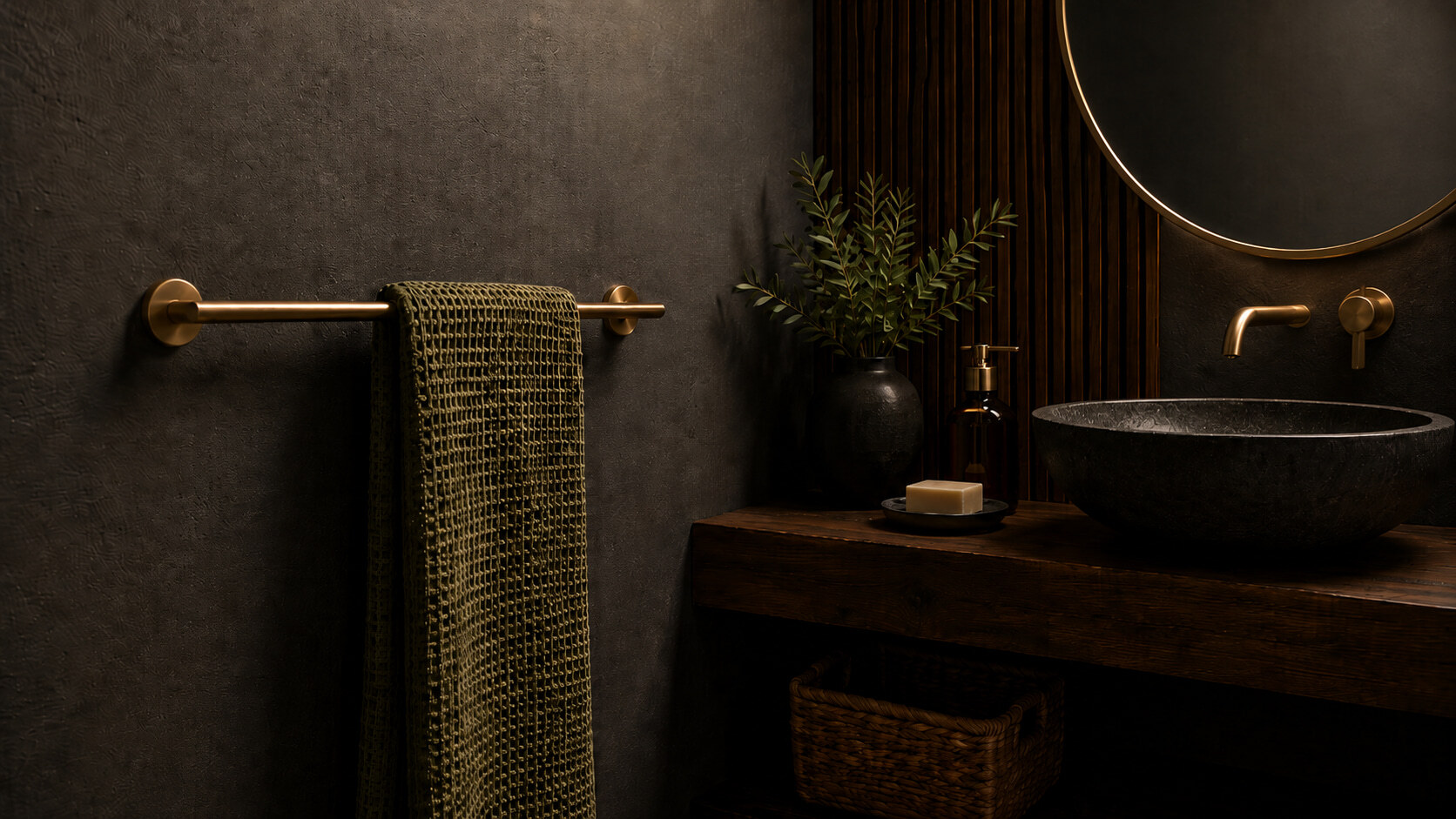
Satin brass is a warm gold-toned finish with a softer appearance than bright polished brass. It adds warmth without looking overly shiny, which makes it a popular choice for bathrooms that feel elevated but not overly formal.
Satin brass pairs well with marble, cream tile, warm white walls, aged wood, dark green cabinetry, navy vanities, and warm stone. It can also work as an accent finish when the main accessories are matte black, satin nickel, or dark bronze.
The main thing to watch is consistency. Brass, brushed gold, champagne bronze, and satin brass are not always identical finishes. If you want towel bars, robe hooks, toilet paper holders, faucets, and lighting to match closely, check the finish name and product series carefully before buying.
Best for: warm contemporary bathrooms, transitional bathrooms, decorative powder rooms, cream tile, marble, wood vanities, and spaces that need warmth.
Dark Bronze
Dark bronze sits between oil-rubbed bronze and matte black. It gives the bathroom depth and contrast, but it usually feels warmer and softer than pure black.
Dark bronze works well when you want a darker finish but do not want the sharper contrast of matte black. It pairs nicely with taupe, warm gray, beige, cream, and darker wood tones. It can also work in contemporary bathrooms that use warmer materials.
Because dark bronze is less common than satin nickel, chrome, or matte black, matching pieces across brands can be more difficult. For the most consistent result, choose towel bars, robe hooks, paper holders, and other accessories from the same series whenever possible.
Best for: transitional bathrooms, warm contemporary bathrooms, taupe tile, dark wood vanities, and spaces where matte black feels too stark.
Stainless Steel and Aluminum
Stainless steel and aluminum are often chosen for practical reasons. These finishes tend to have a clean silver appearance and are commonly used for functional pieces, high-use bathrooms, grab bars, and commercial-style applications.
Stainless steel is valued for its strength and corrosion resistance. It works well in bathrooms where durability and function matter more than decorative contrast. Aluminum is lightweight and corrosion-resistant, making it useful for select hardware applications.
Both finishes can coordinate with polished chrome, satin nickel, and other silver-toned fixtures, but they may not be an exact match. If the bathroom already has a very specific chrome or nickel finish, compare product photos and finish names before mixing stainless steel or aluminum pieces into the room.
Best for: commercial bathrooms, high-use bathrooms, grab bars, utility spaces, modern bathrooms, and practical applications where durability matters.
How to Match Finishes Across the Bathroom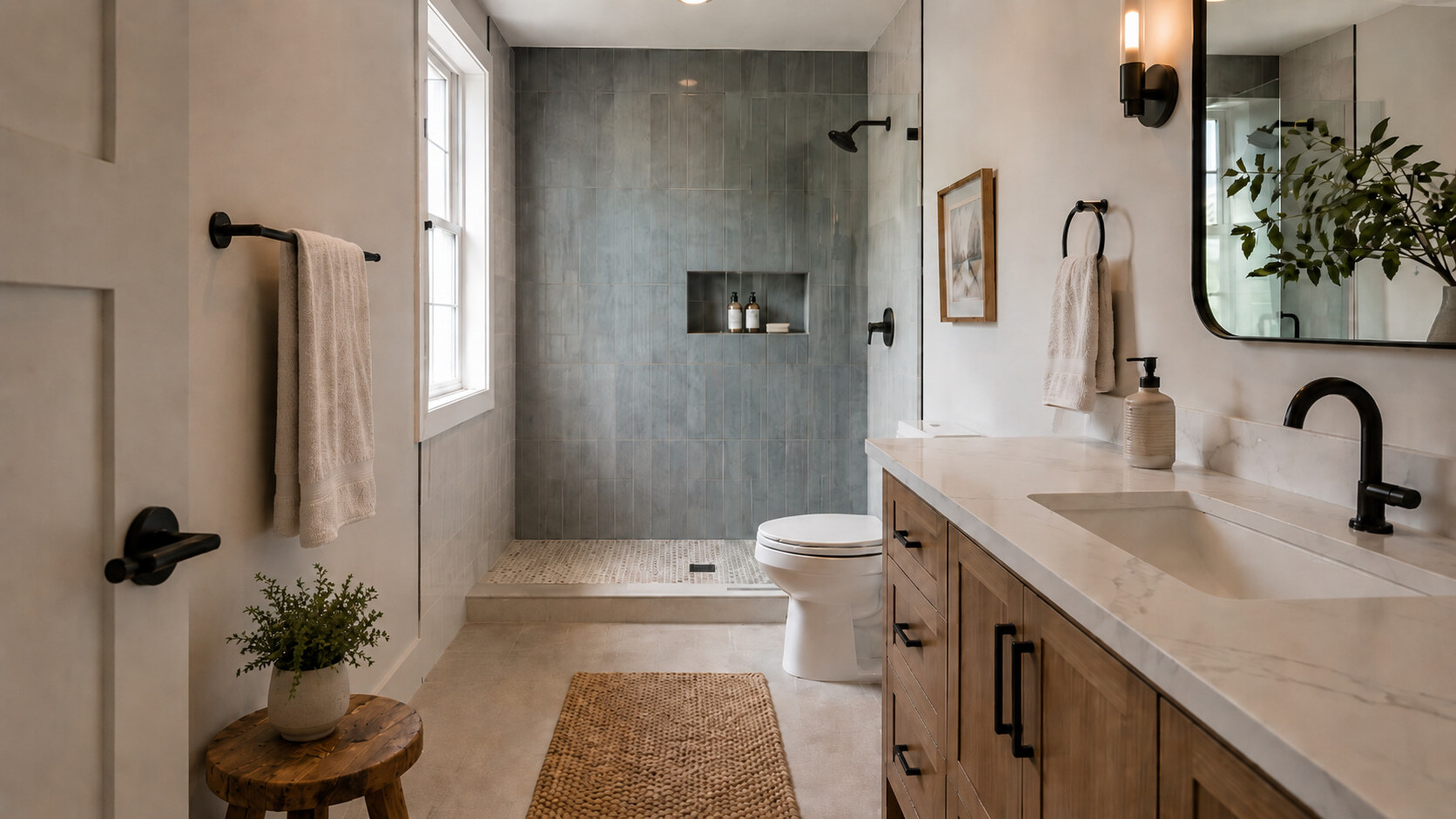
The easiest way to match finishes across the bathroom is to choose one dominant finish and repeat it across the main accessories. Use that finish for towel bars, towel rings, toilet paper holders, robe hooks, shower rods, and grab bars whenever possible.
Start by identifying the fixtures that are already in the bathroom. Faucets, showerheads, tub spouts, drain covers, light fixtures, cabinet pulls, and mirror frames all influence the finish direction. If those pieces are staying, they should guide your hardware selection.
For the safest look, match the main accessories to the faucet or shower trim. A polished chrome faucet usually pairs best with polished chrome accessories. A brushed nickel or satin nickel faucet usually pairs best with satin nickel accessories. A matte black faucet usually pairs best with matte black towel bars, robe hooks, and paper holders.
If you are replacing all accessories at once, consider choosing products from the same series. A coordinated series helps keep the finish, shape, scale, and design language consistent across the room.
Can You Mix Finishes in a Bathroom?
You can mix finishes in a bathroom when the combination looks intentional. The key is to choose one dominant finish and one accent finish, then repeat both finishes more than once in the room.
A bathroom with a matte black faucet, matte black shower trim, satin brass cabinet pulls, and a satin brass light fixture can look intentional because each finish appears multiple times. A bathroom with one random bronze towel bar, one chrome hook, one black paper holder, and a brass faucet usually looks mismatched because there is no clear pattern.
In small bathrooms, limit the room to one or two finishes. Too many finishes can make a compact space feel visually busy. In larger bathrooms, two finishes can work well if one finish is used for plumbing and primary hardware, while the second finish is used for lighting, mirrors, or cabinet hardware.
| Finish Combination | Works Well Together? | Notes |
|---|---|---|
| Satin nickel + polished chrome | Yes | Both are silver-toned; chrome adds more brightness |
| Matte black + satin brass | Yes | Strong contrast; works best when one finish is dominant |
| Oil-rubbed bronze + satin brass | Yes | Both have warm undertones and can feel cohesive |
| Polished chrome + Oil-rubbed bronze | Use caution | The temperature contrast is stronger and needs clear design intent |
| Matte black + polished chrome | Yes | Creates a clean contemporary contrast |
| Satin nickel + satin brass | Yes | Works when both finishes are repeated and kept balanced |
Which Finish Is Easiest to Maintain?
The easiest finishes to maintain are usually satin, brushed, matte, or darker finishes because they do not reflect water spots and fingerprints as clearly as polished surfaces. Polished chrome is durable and easy to wipe clean, but it tends to show marks more quickly because the surface is so reflective.
Maintenance also depends on water quality. Hard water can leave mineral deposits on any finish, including matte black and oil-rubbed bronze. Bathrooms with hard water may need more frequent wiping, especially near sinks, showers, and tub areas.
| Maintenance Level | Best Finish Options | What to Know |
|---|---|---|
| Easiest day-to-day | Satin nickel, matte black, dark bronze, oil-rubbed bronze | These finishes are usually more forgiving with fingerprints and light water marks |
| Moderate maintenance | Satin brass, stainless steel, aluminum | These finishes may show some marks, especially in high-use or hard-water bathrooms |
| Most visible marks | Polished chrome | Chrome is easy to wipe clean, but its reflective surface shows water spots and fingerprints quickly |
For family bathrooms and high-use spaces, satin nickel, matte black, dark bronze, and oil-rubbed bronze are usually more forgiving day-to-day. For guest bathrooms and powder rooms, polished chrome and satin brass can work well because the hardware may not need to handle the same level of daily moisture and fingerprints.
Best Finishes by Bathroom Style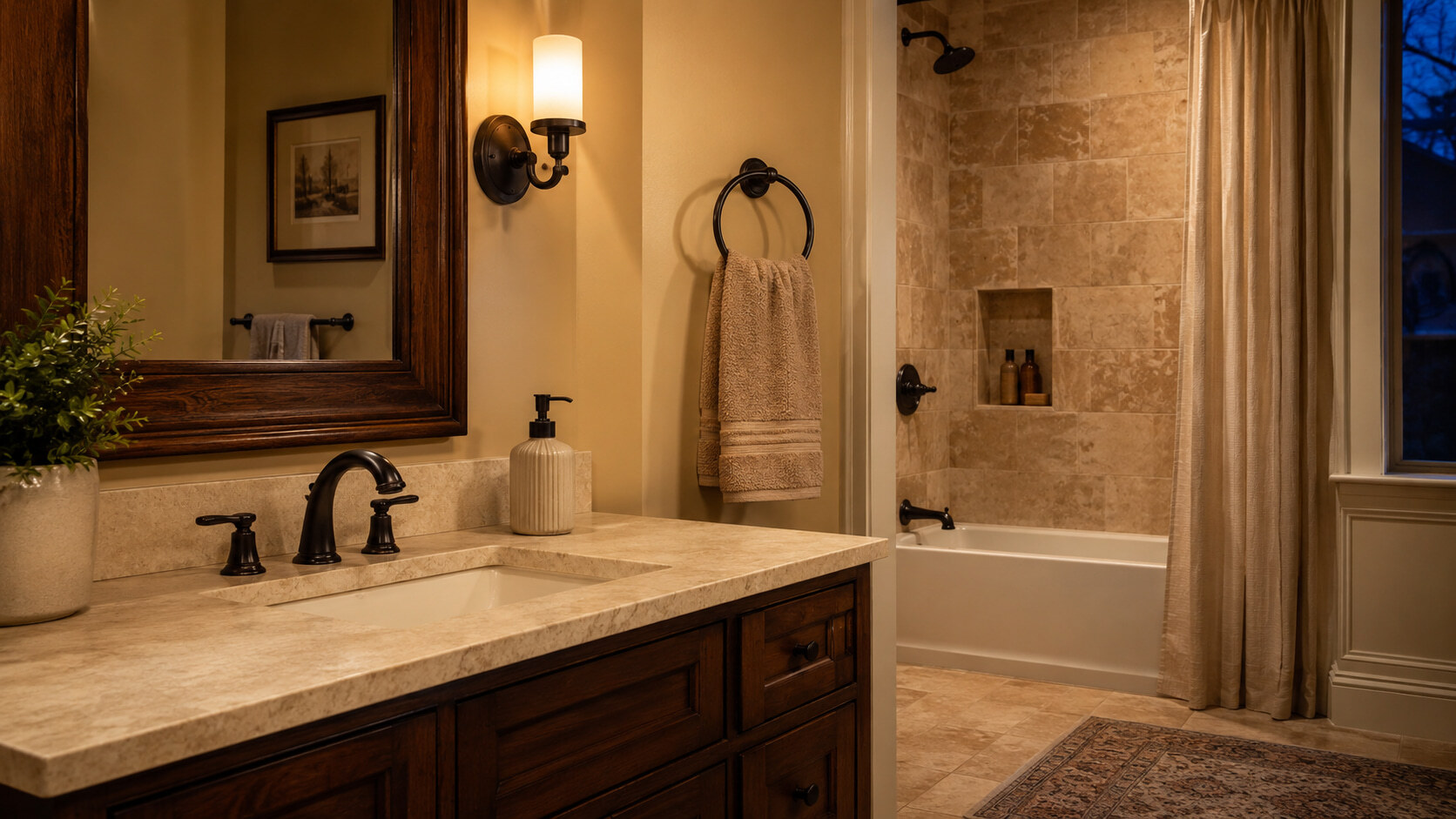
Bathroom style can help narrow your finish choices. A finish should coordinate with the room’s tile, vanity, lighting, faucet, mirror, and cabinet hardware.
For modern or minimalist bathrooms, polished chrome, matte black, and satin nickel usually work best. These finishes support simple lines, clean surfaces, and a more streamlined design.
For traditional bathrooms, oil-rubbed bronze, polished chrome, and dark bronze are strong options. These finishes pair well with classic details, warmer materials, and more decorative fixtures.
For transitional bathrooms, satin nickel, dark bronze, and satin brass are usually the safest choices. These finishes bridge traditional and contemporary design without making the room feel too trendy.
For farmhouse or rustic bathrooms, matte black, oil-rubbed bronze, and dark bronze tend to work well. These finishes pair naturally with wood tones, textured surfaces, and warmer color palettes.
For coastal bathrooms or bright neutral spaces, polished chrome, satin nickel, and aluminum help keep the room feeling clean and open. These finishes work well with white tile, pale stone, soft gray, and lighter cabinetry.
For warm contemporary bathrooms, satin brass, dark bronze, and matte black can add depth without making the room feel overly traditional. These finishes are useful when the bathroom includes warm wood, cream tile, taupe, or darker accent colors.
How to Choose a Finish When Replacing Existing Accessories
When replacing existing accessories, start with the finish and hole spacing of the pieces already installed. The finish determines whether the new hardware will coordinate visually, while the hole spacing determines whether the new hardware can use the existing mounting points.
If you want to avoid repainting, patching, or drilling new holes, check the mounting dimensions before purchasing replacement towel bars, paper holders, or robe hooks. Product pages should list the mounting size or installation details needed to confirm compatibility.
If the old finish is no longer available or difficult to match, choose the closest finish in the same temperature family. Brushed nickel and satin nickel often coordinate well. Chrome and stainless steel can sometimes work together, though they may not be identical. Oil-rubbed bronze and dark bronze can coordinate if the undertones are similar.
Staff Picks
Find the Right Bathroom Hardware Finish at Carter Bay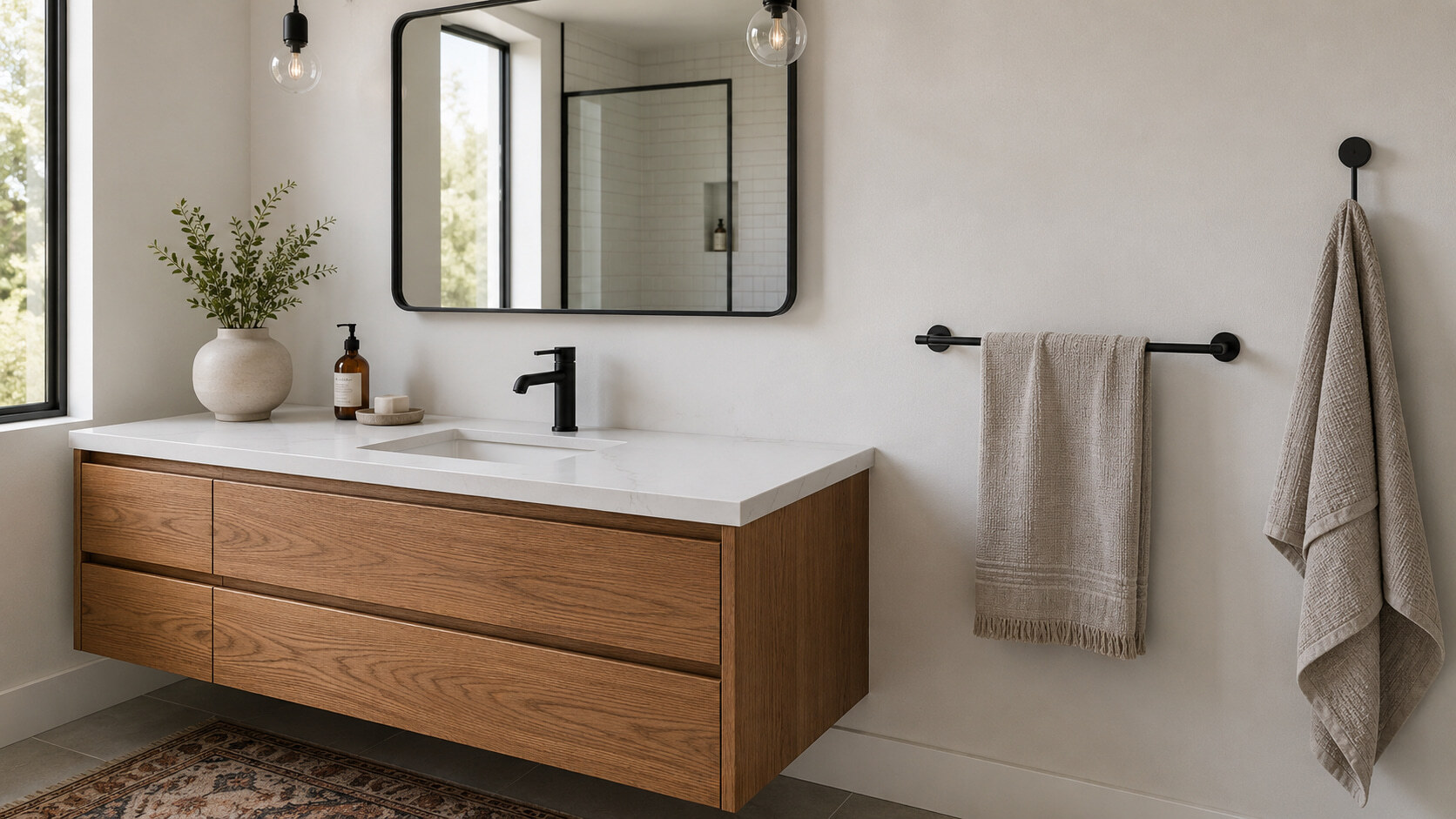
Carter Bay’s bath selection includes a wide range of finishes across towel bars, towel rings, toilet paper holders, robe hooks, shower rods, grab bars, and other bath accessories. The collection page can be filtered by finish, making it easier to narrow the product selection before comparing styles and dimensions.
For towel bars, towel rings, shower curtain rods, grab bars, and other everyday bath accessories, start with shower and bath accessories. If you are shopping for commercial restroom pieces or public restroom hardware, browse toilet compartment accessories. For smaller storage and hanging solutions, wardrobe hooks can help add function without taking up much wall space.
If you want the most coordinated result, start by choosing the finish that matches your faucet or shower trim. Then look for matching pieces within the same product series or brand. This helps keep the shape, scale, and finish consistent across the full bathroom.
If you are updating one piece at a time, compare the product finish carefully against the hardware already in the room. Finish names can vary slightly between manufacturers, especially for brass, bronze, and black finishes. When consistency matters, staying within one series is usually the safest option.
Frequently Asked Questions About Bathroom Finishes
What is the most popular bathroom finish?
Satin nickel is one of the most popular finishes for bath accessories because it is easy to coordinate, works with many bathroom styles, and hides fingerprints better than polished finishes. Matte black is also popular for homeowners who want a stronger modern or farmhouse look.
Can you mix polished chrome and brushed nickel in the same bathroom?
Yes, polished chrome and brushed nickel can work together because both are silver-toned finishes. The combination looks best when one finish is dominant, and the other is used as a smaller accent. For a compact bathroom, matching all main accessories in one finish usually creates a cleaner look.
Does matte black show water spots?
Matte black usually shows fewer fingerprints than polished chrome, but hard water spots and soap residue can still appear on dark surfaces. Wipe matte black hardware with a soft, damp cloth and mild cleaner to help prevent buildup.
Is oil-rubbed bronze going out of style?
Oil-rubbed bronze is less common in very modern bathrooms than matte black or satin brass, but it still works well in traditional, rustic, and warm transitional bathrooms. The finish is a good choice when the bathroom includes wood tones, tan tile, cream walls, or other warm materials.
What finish is most durable for the bathroom?
Durability depends on both the finish and the base material. Satin nickel, polished chrome, and stainless steel are common choices for humid spaces because they are practical and easy to maintain. Matte black, oil-rubbed bronze, satin brass, and dark bronze can also perform well when the hardware is properly made and finished.
Should bathroom fixtures match the faucet?
Bathroom fixtures do not have to match the faucet, but matching the faucet is the safest way to create a coordinated look. If you want to mix finishes, use the faucet as the dominant finish and repeat the accent finish in lighting, cabinet pulls, mirrors, or smaller accessories.
How can I guarantee that my bathroom finishes will match?
The most reliable way to match finishes is to buy pieces from the same product series or manufacturer. This reduces the risk of subtle finish differences between towel bars, robe hooks, toilet paper holders, shower rods, and other accessories.