Smart Locks vs Traditional Deadbolts: Which Is More Secure?
- 9 March 2026
- Carter Bay
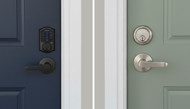
Both smart locks and traditional deadbolts can keep your home secure, but they operate on very different levels. To pick the right one, you need to weigh high-tech utility against old-school reliability and understand the unique maintenance each requires.
At Carter Bay, we offer a range of smart locks and traditional locking solutions built for residential security. Comparing them side by side helps clarify what actually changes when you move from mechanical to connected hardware.
Let's check out the details.
Physical Strength: Are They Built Differently?
Structurally, many smart locks use the same deadbolt design as traditional mechanical locks.
Physical strength depends on:
- American National Standards Institute (ANSI) grading
- Bolt material and length
- Strike plate reinforcement
- Door frame integrity
- Installation quality
If both locks carry the same ANSI rating and are installed correctly, their resistance to forced entry is comparable.
Technology does not automatically make one physically stronger than the other.
Risk Profile: What Type of Threat Are You Managing?

Traditional deadbolts are vulnerable to physical threats, such as picking, bumping, or forced entry.
Smart locks add another type of risk: digital setup. This includes managing passwords, network security, and updating firmware.
This does not mean smart locks are less secure. It just means the type of risk changes. You may have a bit more responsibility, but the overall risk does not necessarily increase.
Maintenance: Passive vs Active Upkeep
Mechanical deadbolts are mostly passive. Once installed properly, they require little attention beyond occasional lubrication.
Smart locks will require occasional maintenance. You have to replace batteries, update firmware, and sometimes adjust settings.
Some homeowners don’t mind the extra steps. Others prefer things to stay simple.
Utility: Fixed System vs Dynamic System
A traditional deadbolt is fixed. Once keys are cut and distributed, changes require rekeying or hardware replacement.
With a smart lock, you can make changes without swapping out hardware. You can set, change, or remove permissions digitally, check entry logs, and give out temporary codes.
This flexibility can be especially useful in environments where access changes frequently.
The difference here is adaptability rather than strength.
Reliability Over Time: Mechanical Simplicity vs Electronic Complexity
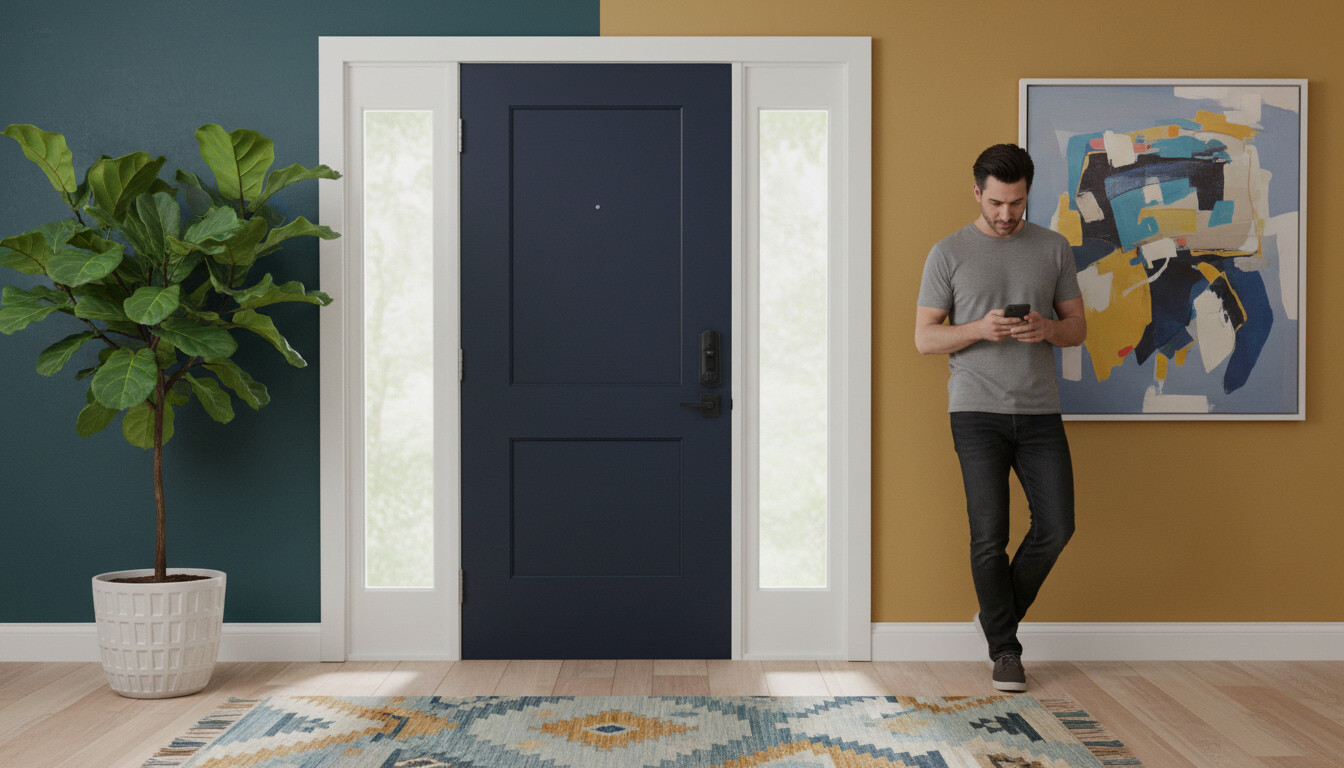
Mechanical locks have fewer parts, which usually means fewer things can go wrong. Smart locks have both electronic and mechanical parts, which introduces additional components that could potentially malfunction.
Regardless, modern smart locks are quite durable and designed to last in most residential and office environments.
Long-term reliability depends heavily on brand quality, installation, and regular maintenance rather than lock type alone.
Installation and Compatibility
Traditional deadbolts are straightforward to install and fit most standard door preparations.
Most modern smart locks are also designed for standard door configurations and are battery-powered, requiring no hardwiring.
For this reason, smart lock installation is usually similar to that of traditional deadbolts.
Before installing either option, homeowners should confirm:
- Door thickness
- Backset measurement
- Door bore hole size
- Frame alignment
For smart locks, compatibility with existing smart home systems may also influence the decision.
Cost and Long-Term Value
Traditional deadbolts are generally less expensive upfront. They are widely available and require no electronic components.
Smart locks typically cost more due to added technology and advanced features.
However, cost should be evaluated over time rather than at the time of purchase alone.
Consider:
- Rekeying costs if keys are lost or copied
- Locksmith service calls
- Time spent managing physical keys
- Convenience value in rental or shared spaces
For households where access rarely changes, a mechanical deadbolt may offer strong long-term value.
For properties with frequently changing entry permissions, the flexibility of a smart lock may offset its higher initial cost.
Value depends on how the home is used.
Real-World Scenarios: Which Lock Fits Your Home?

Security choices are rarely made without context. The best option often depends on how you use your space.
For example:
Single-family home with long-term residents
A traditional deadbolt may be more than sufficient if access rarely changes and simplicity is preferred.
Short-term rental or vacation property
A smart lock allows temporary entry codes to be issued and revoked without exchanging physical keys.
Households with frequent visitors or service providers
Digital permissions can be adjusted without rekeying hardware.
Older homes with solid wood doors and reinforced frames
Either system can perform well if properly installed and rated.
Tech-forward homes with connected systems
A smart lock may integrate more naturally into an existing ecosystem.
Choosing hardware based on real usage needs often leads to stronger long-term security than choosing based on theoretical concerns.
Recommended Smart Electronic Locks
So Which Is More Secure?
If you define security strictly as resistance to physical force, both options perform similarly when properly rated and installed.
If you define security as the ability to manage changing conditions, adjust permissions, and maintain oversight over time, smart locks provide additional tools and utility.
Choose a traditional deadbolt if you value mechanical simplicity and minimal maintenance.
Choose a smart lock if you value flexibility and structured control.
When comparing different door locks, the best option is the one that aligns with how your household actually functions, not just how much force it can withstand.
Security is multi-dimensional. Strength, reliability, and usability all matter.
Frequently Asked Questions About Smart Locks and Deadbolts
Are smart locks as strong as traditional deadbolts? +
Yes, when they carry the same ANSI rating and are installed correctly. Physical strength depends on grading and installation.
Do smart locks introduce more risk? +
They introduce digital considerations such as password management and firmware updates, but high-quality models remain secure when configured responsibly.
Which requires less maintenance? +
Traditional deadbolts require less active maintenance. Smart locks require battery replacement and occasional updates.
Is one clearly better than the other? +
Not universally. The better choice depends on whether you prioritize simplicity or flexibility.