Top Privacy and Safety Options for Sliding Doors in Bathrooms and Bedrooms
- 5 January 2026
- Carter Bay

Sliding pocket doors create a clean, space saving look, but choosing the right privacy and safety hardware is essential, especially in bathrooms, bedrooms, guest rooms, and other personal spaces. Understanding your pocket door privacy options helps you choose hardware that offers comfort, privacy, and smooth everyday use.
If you are planning a full pocket door upgrade, you can browse Carter Bay’s pocket door hardware collection to find frames, tracks, and accessories that pair well with modern privacy solutions.
This guide breaks down the most reliable pocket door privacy locks, explains how to choose the right hardware for each room, and highlights recommended finishes and safety upgrades for a modern home.
Privacy Considerations for Pocket Doors
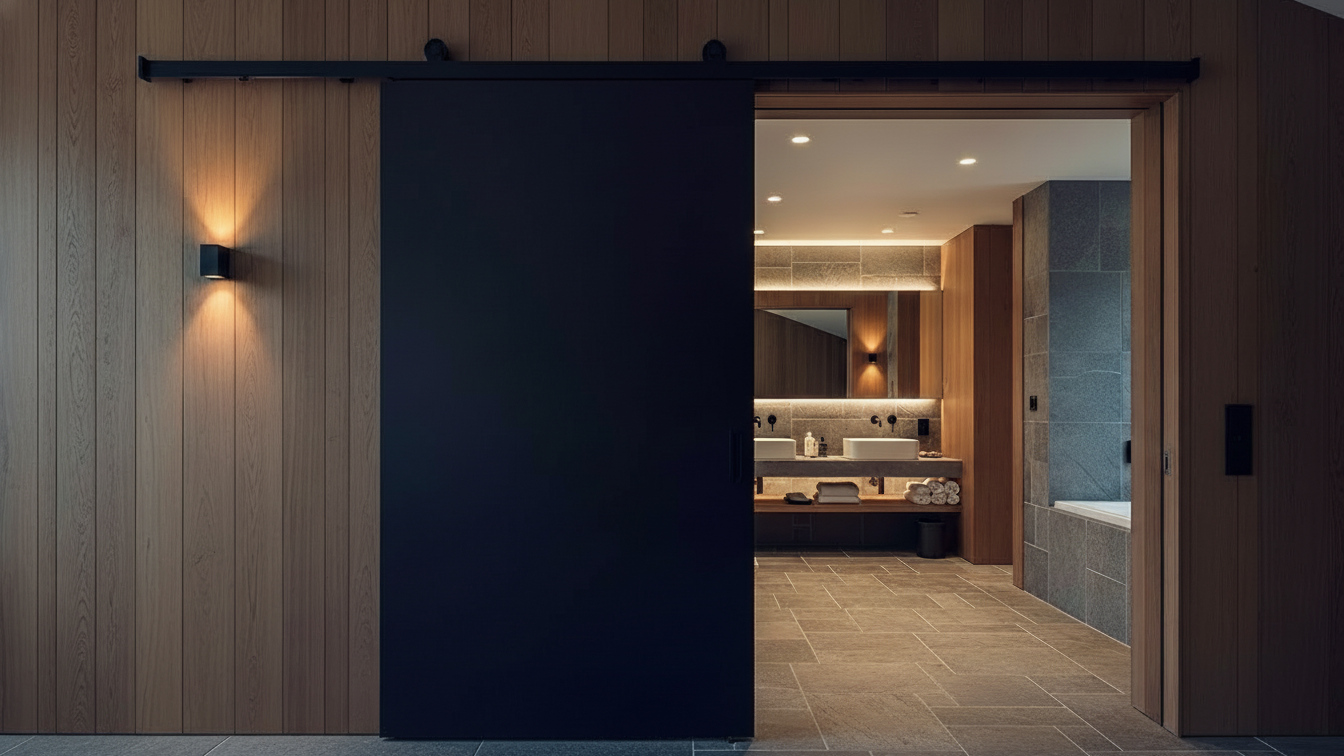
Pocket doors are great for tight spaces, but they do not offer natural privacy in the same way a hinged door does. Because sliding doors do not press firmly into a frame, privacy and sound control depend heavily on the hardware you choose.
Key considerations include:
- Who will be using the room
- How much privacy is needed
- Whether the space requires a locking function
- Noise sensitivity in bedrooms or bathrooms
- Door thickness and material
Bathrooms and bedrooms typically need a lock, while closets or utility rooms often require only a simple pull.
Types of Pocket Door Privacy Locks
To compare your pocket door privacy options effectively, it helps to understand the most common and reliable types of privacy hardware.
Turn lock privacy latches
- A simple, easy to operate locking mechanism commonly used for bathrooms and bedrooms
- Compatible with recessed pulls
- Great for everyday use
- Available in modern finishes like matte black and brushed nickel
Edge pulls with privacy function
- A flush, recessed option that stays out of the way
- Clean, minimalist appearance
- Works well with thinner pocket doors
- Optional locking mechanism depending on the model
Soft close compatible privacy systems
- Some soft close tracks allow privacy hardware to function without obstruction
- Prevents slamming
- Improves quiet operation
- Helps the latch align cleanly when the door closes
Choosing the Right Lock for Your Room
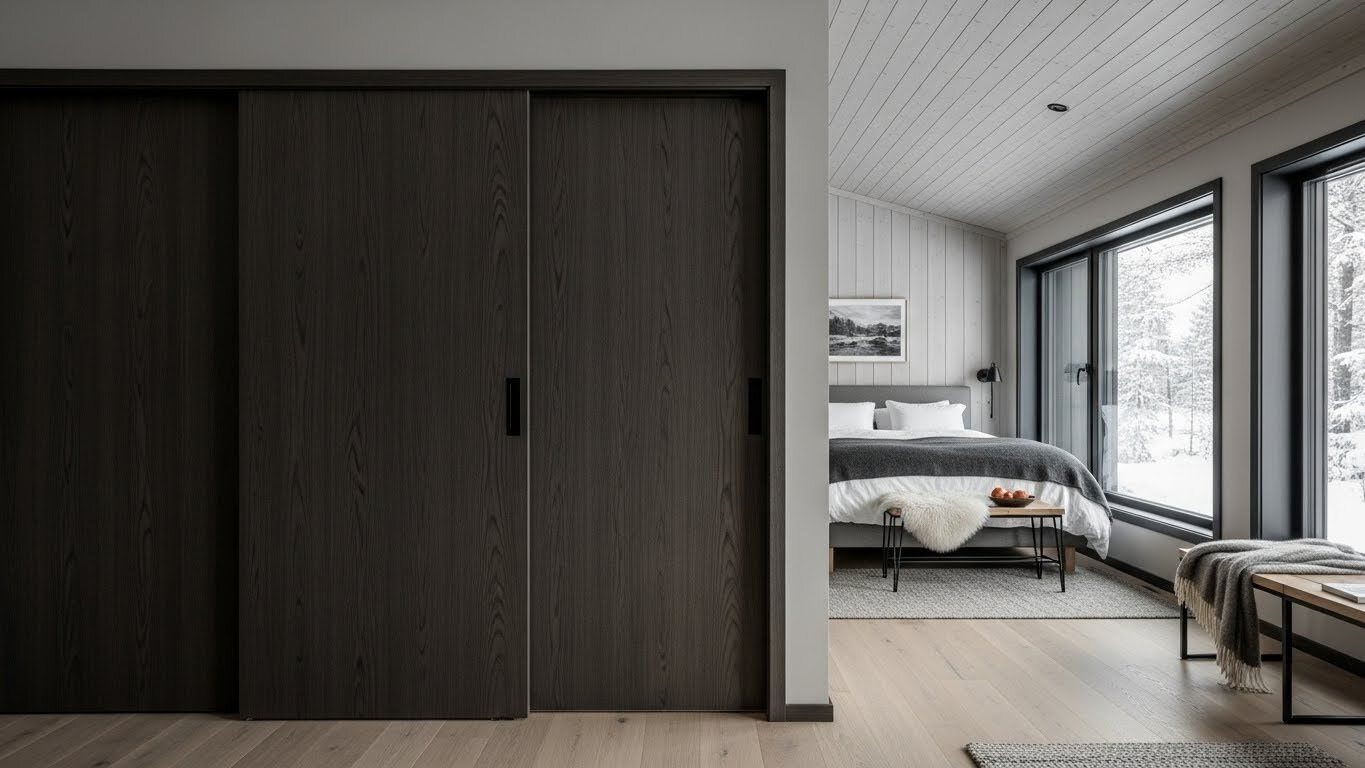
Different rooms require different levels of privacy. Your ideal pocket door privacy options will depend on how the space is used.
Bathrooms
Bathrooms typically need the highest level of privacy.
Recommended features:
- Turn lock privacy latch
- Humidity resistant finishes
Bathrooms benefit most from a dedicated bathroom pocket door lock with a simple turn or indicator mechanism.
Bedrooms
Bedrooms need privacy but not visual indication.
Recommended features:
- Turn lock latch
- Flush pull with integrated privacy function
- Compatibility with soft close tracks
For a clean, modern look, choose low-profile bedroom sliding door hardware that supports privacy without clutter.
Guest rooms and multipurpose rooms
Guests appreciate intuitive hardware.
Recommended features:
- Easy to operate privacy lock
- Recessed or edge pull
- Durable mid-range finishes
Closets and utility rooms
These usually do not require privacy hardware.
Recommended features:
- Simple recessed pull
- No locking component
Compatibility and Installation Considerations
Choosing the right privacy hardware starts with understanding compatibility factors.
Door thickness
Common interior pocket doors range from:
- 1 3/8 inches
- 1 3/4 inches
Privacy latches must match the door’s thickness.
Track and frame compatibility
Some locks require deeper recessed space or specific frame designs. Consider:
- Track width
- Roller size and type
- Door weight
- Edge clearance
Installation skill level
Most privacy locks are straightforward, but some require:
- Precise routing
- Clean mortising
- Accurate drilling
If you are upgrading an existing door, ensure the new hardware fits the current cutouts.
Finishes and Design Considerations

Pocket doors often appear in minimalist or modern spaces, so finish selection has a big impact.
Popular finishes include:
- Matte black
- Brushed nickel
- Polished chrome
- Satin brass
Design tips
- Match the finish to existing bathroom fixtures
- Use a contrasting pull for a modern statement
- Choose slim, low profile hardware for minimalist interiors
- Select humidity resistant finishes for bathrooms
Recommended Hardware Options
Safety Tips for Households
Pocket doors operate differently from hinged doors, so a few safety practices improve long-term performance.
Child friendly privacy options
Choose locks that are simple and intuitive.
Preventing finger pinch points
Soft close systems reduce sudden slamming and improve safety.
Ensuring proper closure
Some privacy locks require the door to fully engage before they can lock.
Maintenance Tips for Long-Term Performance
Well maintained privacy hardware stays smooth and reliable.
- Lubricate internal mechanisms occasionally
- Tighten loose screws
- Check alignment yearly
- Clean recessed pulls to prevent debris buildup
These steps help preserve privacy, sound control, and smooth operation.
Embrace Comfort and Privacy at Home
The right privacy hardware can make a sliding pocket door feel secure, comfortable, and easy to use. Whether you are updating a bathroom, improving a guest bedroom, or refreshing a rental property, well chosen hardware creates a smoother daily experience and adds a polished finishing touch.
For additional privacy hardware beyond sliding systems, you can explore Carter Bay’s range of door locks to find options that suit your preferred finish and style.