Pocket Door Planning: Framing, Wall Requirements, and Hardware Considerations
- 16 February 2026
- Carter Bay

Pocket doors offer meaningful space-saving and design advantages, but their success depends heavily on early planning. For architects, builders, and renovation professionals, pocket door planning begins well before installation and requires careful coordination with framing, wall construction, and adjacent building systems.
This article outlines the key considerations that should be addressed during the design and pre-construction phases to ensure reliable performance and long-term serviceability.
Early planning also helps align framing, wall conditions, and hardware requirements from the start. For specification and component planning, Carter Bay’s extensive pocket door hardware collection provides track systems, rollers, and accessories designed for modern pocket door applications.
Planning Pocket Doors Early in the Design Process

Pocket doors must be accounted for during initial layout planning. Unlike hinged doors, pocket doors occupy internal wall space, which affects structural framing, utilities, and finish detailing.
Early pocket door planning helps avoid:
- Framing conflicts
- Electrical or plumbing interference
- Insufficient wall depth
- Limited access for future adjustments
Confirming feasibility at this stage prevents costly revisions later in the project timeline.
Pocket Door Planning for New Construction vs Renovations
New construction
In new builds, pocket door planning is most effective when integrated into framing layouts from the outset. Wall thickness, stud spacing, and header design can be optimized to accommodate the door and hardware without compromise.
Renovations and remodels
In renovation projects, existing wall conditions often dictate feasibility. Structural elements, load-bearing walls, plumbing stacks, or electrical runs may limit where a pocket door can be installed.
Evaluating wall composition early helps determine whether modifications are practical or whether an alternative door solution is more appropriate.
Wall Thickness and Framing Requirements
One of the most critical aspects of pocket door planning is wall thickness. The wall must be deep enough to house the door panel and track system while maintaining structural integrity.
Planning considerations include:
- Stud depth and spacing
- Header sizing and load transfer
- Compatibility with drywall thickness and finishes
Pocket door framing requirements should be reviewed alongside structural drawings to ensure adequate support and clearances.
Rough Opening Dimensions and Clearances
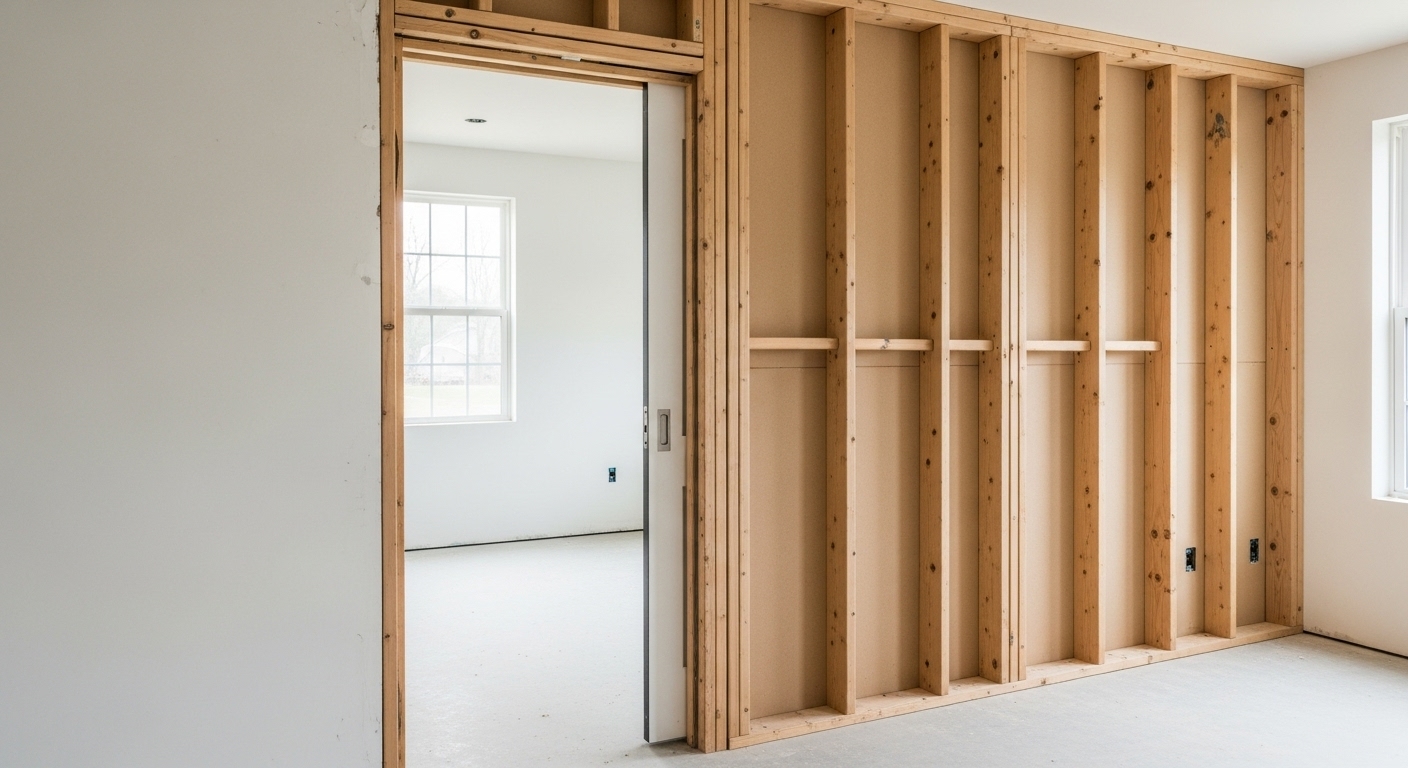
Accurate rough opening dimensions are essential for proper pocket door operation. Openings must account for:
- Door width and height
- Track system length
- Clearance for smooth travel into the wall cavity
Insufficient rough opening dimensions can restrict movement or prevent full door retraction, undermining both function and aesthetics.
Coordinating Pocket Doors with Building Systems
Pocket doors share wall space with multiple building systems, making coordination critical during planning.
Key coordination points include:
- Electrical wiring and switch placement
- Plumbing supply and drain lines
- HVAC ducting and vents
Coordinating pocket door planning alongside mechanical, electrical, and plumbing layouts reduces conflicts and minimizes rework during construction.
Hardware Specifications and Performance Planning
Hardware selection should align with both door specifications and usage expectations. Door weight, size, and frequency of use all influence hardware requirements.
Selecting hardware that exceeds minimum load ratings helps maintain smoother operation, better alignment retention, and longer service life across residential and commercial applications.
Planning for Installation and Future Access
One of the most important pocket door planning considerations is how installation details and future access are handled once walls are closed. Without early coordination, servicing internal components later can require disruptive wall repairs.
During planning, teams should confirm that selected systems allow for reasonable access and adjustment after installation and that these requirements are accounted for before construction begins. Addressing access early helps avoid limitations that are difficult to resolve once finishes are complete.
In projects that include multiple sliding applications, Carter Bay’s sliding door hardware offers a centralized way to source tracks and supporting components while maintaining consistency across broader project requirements.
Acoustic, Privacy, and Usage Considerations
Pocket doors behave differently acoustically than hinged doors. Wall cavities, door thickness, and hardware selection all influence sound transmission and privacy.
Planning considerations include:
- Solid-core versus hollow-core doors
- Soft-close mechanisms to reduce impact noise
- Locking hardware designed specifically for pocket doors
When privacy or controlled access is required, selecting door locks designed for pocket and sliding doors helps ensure secure operation without interfering with movement inside the wall cavity.
When Pocket Doors May Not Be the Right Solution
Despite their advantages, pocket doors are not suitable for every scenario. Pocket door planning should account for:
- Structural constraints
- High acoustic privacy requirements
- Limited wall space or access restrictions
Identifying these limitations early allows design teams to recommend alternative door systems where appropriate.
Recommended Pocket Door Track Options
Final Planning Considerations
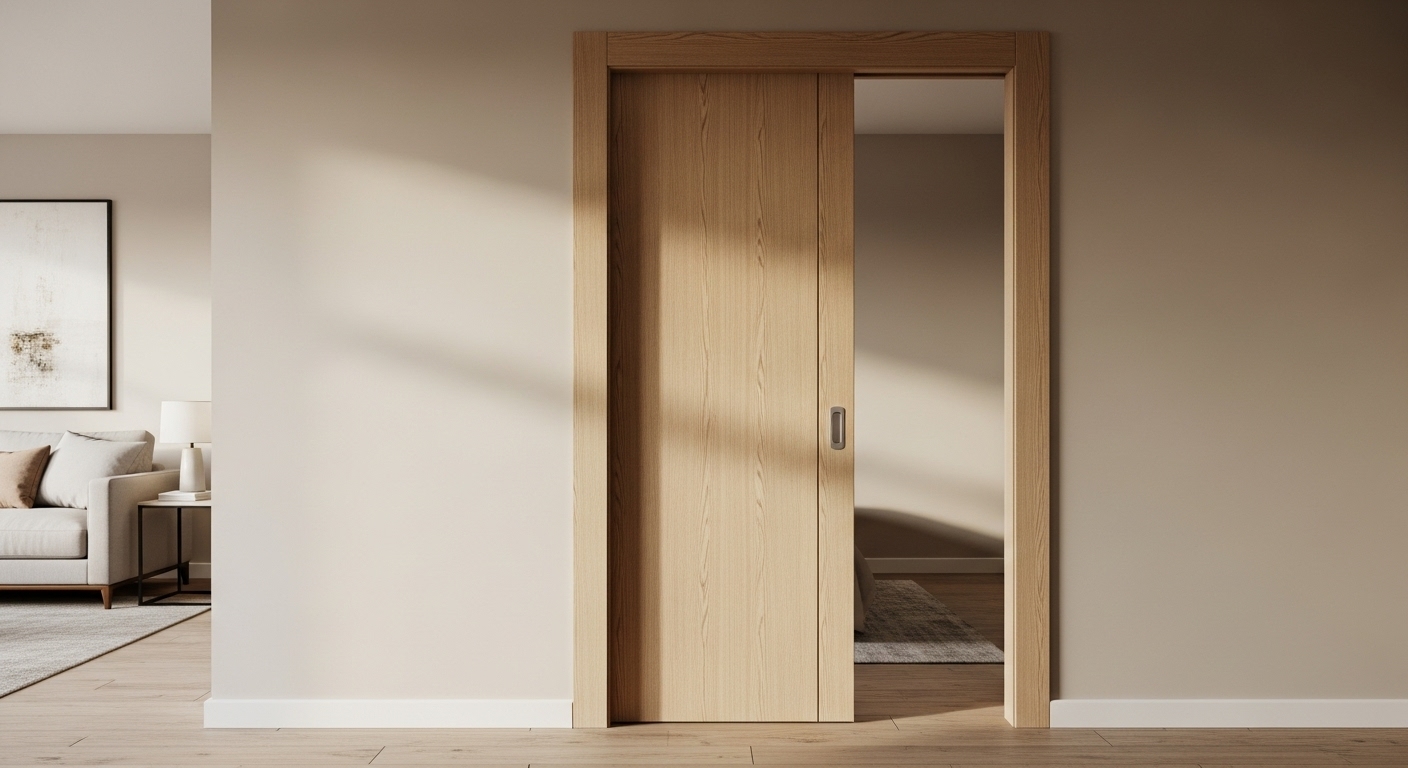
Effective pocket door planning happens long before installation begins. Confirming wall conditions, framing requirements, hardware specifications, and long-term access at the design stage helps prevent costly revisions once construction is underway.
Early coordination across trades and thoughtful hardware specification are essential to achieving smooth operation, serviceability, and occupant satisfaction over the life of the project.
With planning decisions taking shape, it’s a good time to think through the final hardware details. Carter Bay’s door locks catalog offers options that help balance privacy, function, and compatibility with pocket door systems.
Frequently Asked Questions About Pocket Door Planning
When should I plan for pocket doors in my project? +
Plan for pocket doors during the earliest design phases of your project, ideally before finalizing framing layouts and MEP (mechanical, electrical, and plumbing) coordination.
Are pocket doors suitable for load-bearing walls? +
Pocket doors can be installed in load-bearing walls, but doing so requires proper structural headers and careful framing design to maintain load paths.
Can pocket doors be added during a renovation? +
Yes, but feasibility depends on existing wall conditions, utilities, and structural elements. Early assessment is essential.
What is the most common planning mistake with pocket doors? +
Failing to account for wall depth and access for future adjustments is one of the most common and costly planning errors.
Do pocket doors require special hardware planning? +
Yes. Hardware must be selected based on door weight, usage, and access requirements to ensure long-term performance.