Common Pocket Door Problems and How to Fix Them
- 19 January 2026
- Carter Bay

Pocket doors save space and offer a clean, modern look, but like any moving system, they can develop issues over time. The good news is that fixing a pocket door can be quite simple once you know what's causing the issue.
This guide covers the most common pocket door problems, explains how to diagnose them, and provides easy ways to get your sliding door working smoothly again.
If your repair project requires new parts, you can explore Carter Bay’s pocket door hardware collection to find replacement rollers, tracks, and accessories that pair well with modern systems.
1. Pocket Door Off Track
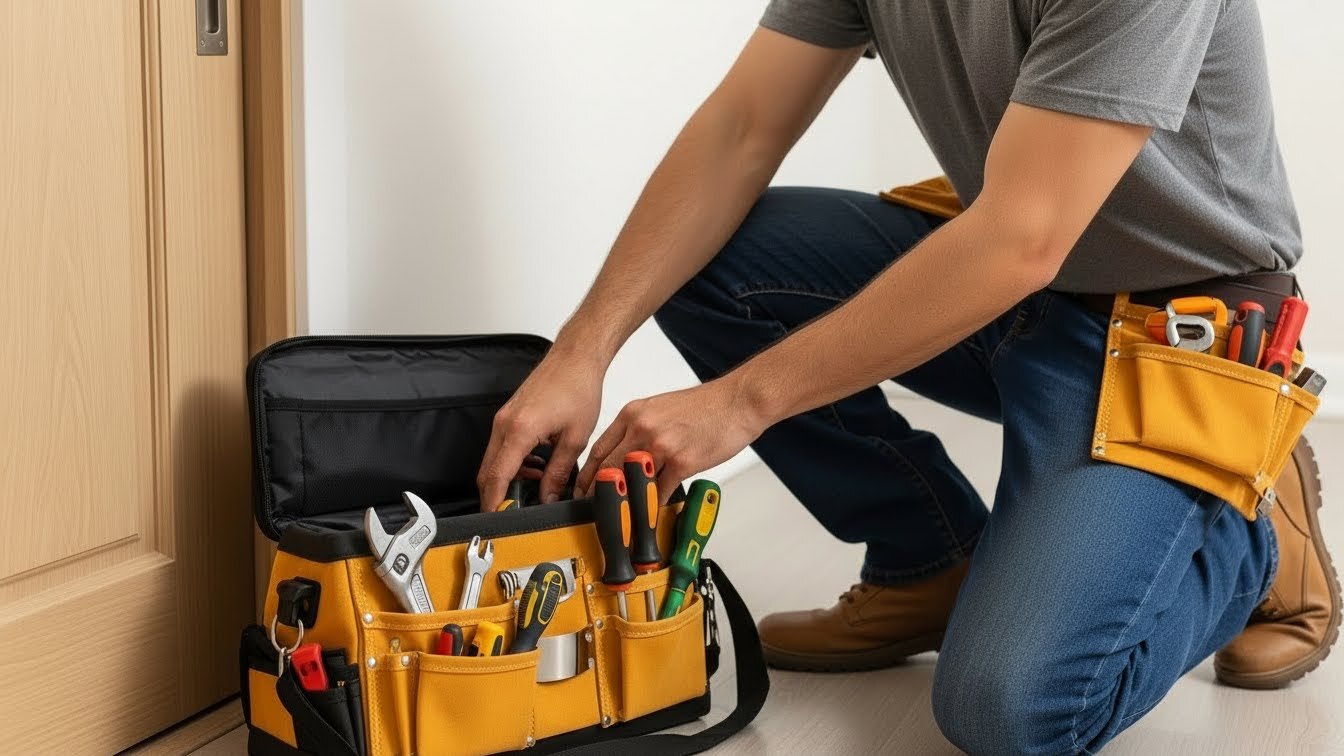
A pocket door that slips off its track is one of the most common issues homeowners run into. This usually happens due to worn rollers, a bent track, or improper installation.
Signs your door is off track
- Door sags or looks uneven
- Door scrapes against the frame
- Door does not slide smoothly
- You hear grinding or popping noises
How to fix it
- Remove the door stop trim carefully.
- Lift the door slightly to relieve pressure on the rollers.
- Reposition the rollers back onto the track.
- Check for bent or damaged track sections.
- Replace worn rollers if needed.
If the track is damaged beyond repair, consider replacing it with a durable system for long-term reliability.
2. Pocket Door Won’t Close Fully
A pocket door that will not close usually has one of three issues: track obstruction, roller misadjustment, or frame shifting.
Possible causes
- Obstruction inside the wall cavity
- Roller height imbalance
- Misaligned door frame
- Soft close mechanism not functioning correctly
How to fix it
- Inspect the top rollers and adjust them evenly.
- Check the bottom guide to ensure the door is sitting correctly.
- Look for debris inside the cavity using a flashlight.
- Check the door frame for shifting or warping.
Pro Tip
If the door closes halfway and then stops, you may be dealing with roller resistance rather than a frame issue. A small roller height adjustment often fixes this.
3. Sticking Pocket Door
A sticking pocket door can be caused by friction, rubbing, humidity changes, or minor warping.
Common causes
- Swelling from moisture
- Door rubbing against the frame
- Dirty or sticky rollers
- Paint buildup around the edges
How to fix it
- Identify where the door is rubbing by sliding it slowly.
- Sand or plane small high spots on wooden doors.
- Clean the rollers and track to remove debris.
- Use a dry lubricant to improve glide.
If sticking continues, the issue may be related to a deeper sliding door alignment problem.
4. Sliding Door Alignment Issues
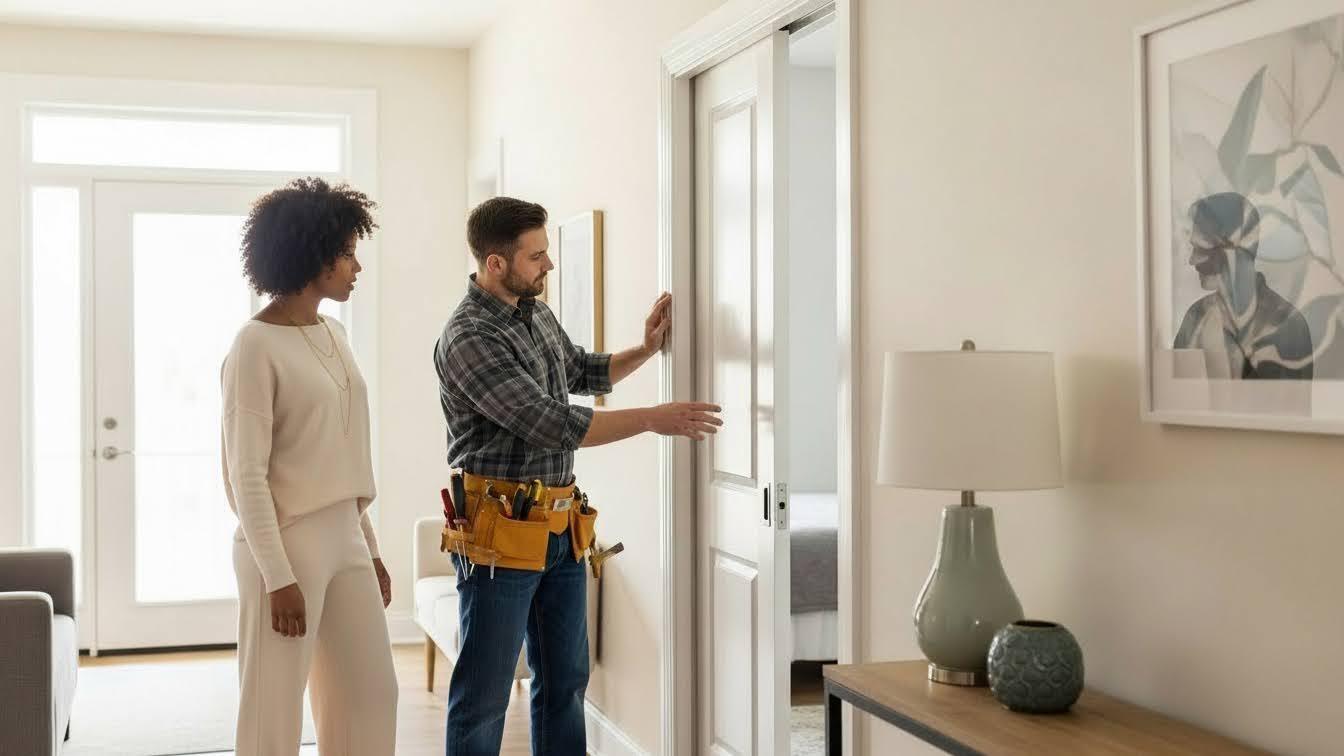
Alignment issues can cause scraping, uneven movement, or visible gaps when closed. This is usually mechanical and easy to correct.
How to diagnose
- Check whether the top of the door is level.
- Look for uneven gaps along the vertical edges.
- Slide the door halfway and note any resistance.
How to correct alignment
- Remove the top trim to access the roller hangers.
- Adjust the roller screws to raise or lower each side.
- Ensure the door clears the bottom guide.
- Recheck alignment after each adjustment.
Frequent door shifting often indicates that the frame has become loose, which is a deeper alignment issue. In this case, you may need to reinforce the frame or replace the track entirely to resolve the problem
5. Loose or Worn Rollers
Rollers naturally wear down over time, especially in high-traffic areas.
Signs of worn rollers
- Loud grinding
- Jerky movement
- Roller wheels that wobble
- Visible flat spots or cracks
How to fix it
- Replace the roller set with a high-quality option.
- Inspect the track for dents or bends.
- Lubricate new rollers lightly for smooth movement.
Carter Bay offers durable sliding door hardware options designed for long-term performance, including reliable replacement rollers.
6. Damaged or Bent Tracks
Track damage is less common but more serious.
Symptoms
- Door repeatedly slips off
- Loud scraping sounds
- Door cannot sit correctly in the cavity
How to repair
Small bends can sometimes be straightened with care, but most damaged tracks should be replaced.
If a full replacement is needed, choose a sturdy track system that supports smooth sliding and long-term durability.
Recommended Pocket Door Repair Kits and Hardware Options
Maintenance Tips for Preventing Future Problems

Good maintenance keeps the door running smoothly.
Every few months:
- Wipe debris from the track
- Lubricate the rollers with a dry lubricant
- Tighten loose screws on roller hangers
- Clean edge pulls and flush hardware
Yearly:
- Check the frame for shifting
- Inspect track alignment
- Look for wear on the rollers
Preventative care is the simplest form of pocket door repair.
Getting Your Pocket Door Working Like New
Pocket doors are convenient and stylish, and most issues are easy to fix with the right approach. Whether your pocket door is sticking, off track, or refusing to close fully, understanding the cause makes repair much simpler. With a few adjustments or replacement parts, your door can glide smoothly and feel like new again.
Take a look at Carter Bay’s full range of door locks to find styles that suit your project.